谁嫁给了Carol II of Romania?
Zizi Lambrino 结婚了 Carol II of Romania 。 婚礼当天,Carol II of Romania 24 岁 (24 年 10 个月零 16 天)。 婚礼当天,Zizi Lambrino 19 岁 (19 年 10 个月零 28 天)。 年龄差距为 4 年 11 个月零 18 天.
这段婚姻持续了 0 年 11 个月零 1 天(335 天)。 这段婚姻于结束。
Helen of Greece and Denmark 结婚了 Carol II of Romania 。 婚礼当天,Carol II of Romania 27 岁 (27 年 4 个月零 23 天)。 婚礼当天,Helen of Greece and Denmark 24 岁 (24 年 10 个月零 8 天)。 年龄差距为 2 年 6 个月零 17 天.
这段婚姻于结束。
玛格达·卢佩斯库 结婚了 Carol II of Romania 。 婚礼当天,Carol II of Romania 53 岁 (53 年 7 个月零 19 天)。 婚礼当天,玛格达·卢佩斯库 51 岁 (51 年 8 个月零 19 天)。 年龄差距为 1 年 11 个月零 0 天.
这段婚姻持续了 5 年 10 个月零 1 天(2132 天)。 这段婚姻于结束。
Carol II of Romania: 婚姻状况时间表
1 Pixel = 1 Month

Carol II of Romania
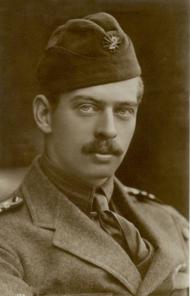
Carol II (15 October 1893 [O.S. 3 October 1893] – 4 April 1953) was King of Romania from 8 June 1930 following a coup that deposed his son until his forced abdication on 6 September 1940. As the eldest son of King Ferdinand I, he was crown prince from the death of his granduncle, King Carol I, in 1914 until he was forced to renounce his right to the throne in 1925.
Carol's life and reign were surrounded by controversy, such as his desertion from the army during World War I. Another controversy was his marriage to Zizi Lambrino, who was not from a royal lineage. After the dissolution of his first marriage, he met Princess Helen of Greece and Denmark, daughter of King Constantine I of Greece, married her in March 1921, and later that year, they had a son, Michael. Due to his continued extramarital affair with Elena Lupescu, Carol was forced to renounce his succession rights in 1925. His father removed Carol from the royal house of Romania and he was exiled to France along with Lupescu. Michael, aged 5, inherited the throne on the death of King Ferdinand in 1927. Princess Helen divorced Carol in 1928.
In the political crisis resulting from the deaths of King Ferdinand and the prime minister and the ineffective regency of Prince Nicholas of Romania, Miron Cristea, and Gheorghe Buzdugan, Carol was allowed to return to Romania in 1930. His name was restored by the royal house of Romania, and he deposed his son and claimed the throne as Carol II. The beginning of his reign was marked by the negative economic effects of the Great Depression. He weakened the parliament of Romania, often appointing minority factions of historical parties to the government and attempting to form nationally concentrated governments, such as the Iorga-Argetoianu government. He surrounded himself with a corrupt circle of advisors, which included Lupescu. Another political crisis followed the December 1937 elections, in which no party achieved an absolute majority and a coalition could not be formed because of disagreements between the various political factions. Following this crisis, Carol established a royal dictatorship in 1938 by suspending the 1923 constitution, abolishing all political parties, and forming a National Renaissance Front which consisted mostly of former members of the National Peasants' Party and the National Christian Party who he had patronized. The National Renaissance Front was the last of several attempts to counter the popularity of the fascist Iron Guard.
At the outbreak of World War II, Carol reaffirmed the Polish–Romanian alliance. Poland, which wished to follow the Romanian Bridgehead plan, declined Romanian military assistance. Following the fall of Poland and the involvement of the Soviet Union, Carol maintained a neutrality policy. After the fall of France, he shifted his policy in favor of re-alignment with Nazi Germany in hopes of gaining a guarantee that Germany would not invade Romania. The year 1940 marked the fragmentation of Greater Romania by the seceding of Bessarabia and Northern Bukovina to the Soviet Union, Northern Transylvania to Hungary and Southern Dobruja to Bulgaria. Although a German guarantee had been achieved, the cost destroyed Carol's reputation, his regime collapsed and he was forced to abdicate by General Ion Antonescu, the newly appointed and Nazi-backed prime minister. He was succeeded by his son Michael. After his abdication, Carol was permitted to leave the country with a train loaded with 30 truckloads of his personal fortune, which he had acquired during his time as king. In a failed attempt to assassinate Carol, the Iron Guard shot at the train as it was passing through Timișoara station. After World War II, Carol II wanted to regain the throne but was stopped by the Western Allies. For the rest of his life, he traveled the world, finally marrying Lupescu while living in Brazil in 1947. After settling in the Portuguese Riviera, Carol II died peacefully at the age of 59 in exile. His son Michael I refused to attend his funeral out of disgust for the treatment of his mother, Princess Helen by his father.
阅读全文...
Zizi Lambrino

Joanna Marie Valentina "Zizi" Lambrino (3 October 1898 – 11 March 1953) was the first wife of the later King Carol II of Romania. They had one son, Carol, born in 1920, in Bucharest.
阅读全文...Carol II of Romania
Helen of Greece and Denmark

Helen of Greece and Denmark (Greek: Ελένη, romanized: Eléni; Romanian: Elena; 2 May 1896 – 28 November 1982) was the queen mother of Romania during the reign of her son King Michael I (1940–1947). Her humanitarian efforts to save Romanian Jews during World War II led to her being awarded by the State of Israel with the honorific of Righteous Among the Nations in 1993.
Daughter of King Constantine I of Greece and his wife, Princess Sophia of Prussia, Helen spent her childhood in Greece, the United Kingdom and Germany. The outbreak of World War I and the overthrow of her father by the Allies in 1917 permanently marked her and also separated her from her favorite brother, the young Alexander I of Greece. Exiled in Switzerland along with most members of the royal family, Helen then spent several months caring for her father, plagued by disease and depression. In 1920, the princess met Carol, Crown Prince of Romania, who quickly asked her hand in marriage. Despite the bad reputation of the prince, Helen accepted and moved to Romania, where she soon gave birth to their only son, Prince Michael, in 1921.
The situation of her family, however, continued to worry Helen, who made several trips abroad to visit her parents when they did not simply reside with her in Bucharest. In doing this, she distanced herself from her husband, whose multiple affairs ended when he fell in love with Magda Lupescu in 1924. Finally, in 1925, Crown Prince Carol abandoned his wife and renounced the throne in order to live openly with his mistress. Distraught, Helen tried to persuade her husband to return to her but eventually she accepted the divorce in 1928. In the meanwhile, Helen was proclaimed "Queen Mother of Romania" in 1927, as her son Michael ascended to the throne under the regency of his uncle Prince Nicolae. However, the political situation in Romania was complicated and Carol took advantage of the increased instability to return to Bucharest in 1930 and be acclaimed as king. Soon, the new ruler forced his ex-wife into exile and only authorized her to see their son two months per year.
In these circumstances, Helen moved to Villa Sparta at Fiesole, Tuscany. Always close to her family, she hosted her sisters Irene and Katherine and brother Paul, who stayed with her intermittently until the restoration of the Greek monarchy in 1935. The outbreak of World War II, the deposition of Carol II and the subsequent dismemberment of Greater Romania in 1940, however, brought Helen back to be with her son in Bucharest. Subject to the dictatorship of General Antonescu and vigilance of Nazi Germany, the king and his mother were cautious in their dealings with the fascist regime. They did not show their opposition to the participation of Romania in the invasion of the Soviet Union and the deportation of Jews. Finally, King Michael organized a coup against Antonescu on 23 August 1944 and Romania turned against the Axis powers; however, the country was, in the end, occupied by the Red Army.
For Helen and her son, the post-war period was marked by the interference of the Soviet Union in Romanian political life. In March 1945, the king was forced to accept a communist government headed by Petru Groza while the following year, the rigged general elections confirmed the hegemony of the PCR in the country. Finally, Michael I was forced to abdicate on 30 December 1947 and the royal family took the path of exile. She then returned to the Villa Sparta, where she divided her time among her family, gardening and the study of Italian art. Increasingly concerned about her finances, Helen finally left Italy for Switzerland in 1979 and died three years later with her son at her side.
阅读全文...Carol II of Romania
玛格达·卢佩斯库

Magda Lupescu (born Elena Lupescu; 3/15 September 1899 – 29 June 1977), later known as Princess Carol of Hohenzollern-Sigmaringen, was the mistress and later wife of King Carol II of Romania.
阅读全文...